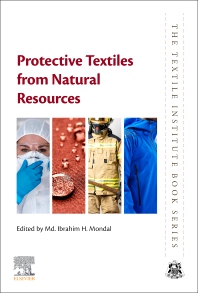
Description Protective Textiles from Natural Resources provides systematic coverage of the fundamentals, production methods, processing techniques, characterization techniques, properties and applications of natural textile products for protective purposes. The subject of this book is an important kind of technical textile designed to protect the wearer from injuries, illness and death. They offer enhanced protection against phenomena including heat, cold, flame, chemical, biological, nuclear agents, radiation, disaster and even ballistics. As no single type of clothing can be adequate for all kinds of protection, extensive research is carried out to develop protective clothing for specialized civilian and military applications. The latest research on the use of natural fibres in PPE is also covered, which could make a significant contribution to the fight against the spread of COVID-19. This comprehensive guide explores a wide variety of themes from material processing and design to finished products, through protection against specific hazards to specific applications, including all significant new developments on natural materials for protective textiles. Key Features Explains the latest technologies related to fibre extraction from natural sources, chemical treatments, weave constructions, fabric finishes and coatings. Includes the latest research on natural fibers in personal protective equipment (PPE) to protect wearers from bacterial and viral contamination. Explains the state of the art in testing methods and standards for protective clothing Readership Academic and industry researchers working in textiles and fibre engineering. Manufacturers of protective clothing products. Table of Contents Part One. Protective textile materials 1. Introduction to protective textiles 1.1. Introduction 1.2. Protective textiles – an overview 1.3. Materials for the manufacture of protective textiles from natural resources 1.4. Manufacturing techniques of protective clothing from natural resources 1.5. Antibacterial, antiviral protective textiles 1.6. Protective masks manufactured from natural resources 1.7. Nuclear and radiological protective clothing 1.8. Spacesuits for protection and thermal comfort 1.9. Protective clothing for civilian and specialist industrial workers 1.10. Chemical protective clothing (CPC) 1.11. Fire/flame-retardant apparel 1.12. Ballistic protection 1.13. Conclusion 1.14. Future scope of protective textiles 2. Protective medical textiles for patients and health professionals 2.1. Introduction 2.2. Different types of protective medical textiles 2.3. Antimicrobial agents for personal protective equipment 2.4. Manufacturing process 2.5. Selection of nonwoven fabrics for medical protective clothing 2.6. Regulations and recommendations for personal protective equipment in the healthcare sector 2.7. Recent development 2.8. Reuse and recycling of protective medical textiles (biodegradability/disposable materials, cleaning, sterilizing, etc.) 2.9. Conclusion 2.10. Challenges and future perspectives 3. Nanomaterial-based smart and sustainable protective textiles 3.1. Introduction 3.2. Protective textiles 3.3. Nanomaterial-based protective textiles 3.4. Environmental implications 3.5. Conclusion 3.6. Challenges and future perspectives 4. Protective textiles from the past and for the modern age 4.1. Introduction 4.2. Natural fibres from the past: what we have lost and what we need to forget 4.3. Modern textiles 4.4. The case of waterproof materials 4.5. Eco-friendly textiles 4.6. Modern green treatments of textiles 4.7. Conclusion 4.8. Future perspectives 5. The concept of biomimetics in the development of protective textiles 5.1. Introduction 5.2. Principles of biomimetic protective textiles 5.3. Applications of biomimetic protective textiles 5.4. Development models of biomimetic protective textiles technology 5.5. Conclusion 5.6. Future outlook 6. The limitations of natural resources in the use of medical and protective textiles 6.1. Introduction 6.2. Natural resources of textiles 6.3. Medical and protective textiles 6.4. Antimicrobial textile nanocomposite 6.5. Antimicrobial mechanisms 6.6. Conclusions 6.7. Future research trends Part Two. Microbial (viruses, bacteria and fungi) protective textiles 7. Microbial (viruses, bacteria and fungi) protective personal clothing 7.1. Introduction 7.2. Microorganisms: bacteria, viruses and fungi 7.3. Infectious, nosocomial diseases, pandemics and the need for microbial protective personal clothing 7.4. Infectious agents: bacteria and viruses, their nature and adhesion to textiles 7.5. Strategies used for personal protection against infectious agents 7.6. Antimicrobial and antiviral finishing techniques 7.7. Antimicrobial and antiviral personal protective clothing 7.8. Methods used to fix the natural antimicrobials to textiles, while maintaining breathability 7.9. Activity of biofunctionalized textiles against viruses and bacteria using antimicrobial agents from natural resources 7.10. Cytotoxicity of antimicrobial and antiviral agents used in textile finishing 7.11. Mechanism of antiviral and antimicrobial activity 7.12. Antiviral and antimicrobial test methods 7.13. Conclusion 7.14. Future scope/prospective 8. COVID-19 protective textiles for breathable face masks 8.1. Introduction 8.2. Information on COVID-19 8.3. Available COVID-19 protective commodities 8.4. The standard requirements of COVID-19 protective commodities 8.5. COVID-19 protective textiles for breathable face masks 8.6. The advantages of medical protective textiles obtained from natural resources (PTNR) 8.7. The crucial technology of PTNR for breathable face masks to prevent COVID-19 transmission 8.8. Conclusion 8.9. Information for new sources of further advice 9. Advances on virucidal textile coatings 9.1. Introduction 9.2. Pathogenic viruses and their mode of action 9.3. Virucidal agents and inactivation mechanisms 9.4. Methods for virucidal textile preparation 9.5. Virucidal textile application 9.6. Conclusions 9.7. Challenges and outlook Part Three. Protection against different agencies and applications 10. High-performance thermal and cold protective clothing 10.1. Introduction 10.2. Thermal protective textiles 10.3. Cold protective textiles 10.4. Conclusion 11. Protective smart textiles for sportswear 11.1. Introduction 11.2. Smart textile materials for protection 11.3. Functions of smart textiles 11.4. Innovations in smart textiles 11.5. Smart textiles for sportswear 11.6. Smart textiles for human safety 11.7. Conclusions 11.8. Outlook and future trends 12. Waterproof breathable fabrics and suits 12.1. Introduction 12.2. Classifications of breathable fabrics 12.3. Densely woven fabrics 12.4. Microporous membranes and coatings 12.5. Electrospinning 12.6. Hydrophilic membranes 12.7. Hydrophobic membranes 12.8. Combination of microporous hydrophobic and hydrophilic membranes 12.9. Printing of retroreflective microbeads 12.10. Smart breathable fabrics based on shape memory polymers (SMPs) 12.11. Smart breathable fabrics based on phase change materials (PCMs) 12.12. Fabric based on biomimetics 12.13. Waterproof breathable suits 12.14. Characterization of waterproof breathable fabrics 12.15. Conclusion 13. Breathable and adaptive thermo-responsive personal protective clothing 13.1. Introduction 13.2. State of the art on breathable and adaptive thermo-sensitive PPC 13.3. Related technologies of breathable and adaptive thermo-sensitive PPC 13.4. Conclusions 13.5. Future outlook 14. Ultraviolet-blocking protective textiles 14.1. Introduction 14.2. Effects of UV on the human body 14.3. Various parameters for UV-protective textile fabrics 14.4. Various techniques for blocking UV using textiles 14.5. Impacts of different textile factors 14.6. Eco-friendly materials for the finishing of UV-protective textiles 14.7. Conclusions 14.8. Future trends and perspectives 15. Natural fibre-based protective textiles for noise reduction applications 15.1. Introduction 15.2. Natural fibrous materials 15.3. Theoretical foundation and measurements 15.4. Structural design of natural fibrous materials 15.5. Conclusion 15.6. Future perspective 16. Protective textiles from natural resources for electromagnetic shielding 16.1. Introduction 16.2. Electromagnetic shielding – theoretical basics 16.3. Measurement of the electromagnetic interference shielding effectiveness 16.4. Materials with electromagnetic shielding properties 16.5. Conclusions 16.6. Future perspectives 17. Fibre-based wearable electronic technology for personal protective clothing 17.1. Introduction 17.2. Working environment and protective clothing 17.3. Material design and fabrication strategies 17.4. Wearable devices for personal protective clothing 17.5. Characterization of e-textiles 17.6. Advantages and disadvantages of natural renewable textiles 17.7. Conclusions 17.8. Future studies 18. Nuclear and radiological protective clothing 18.1. Introduction 18.2. Types and characteristics of ionizing radiation 18.3. Exposure to ionizing radiation 18.4. Conventional interactions of ionizing radiation with biological matter 18.5. Health effects of ionizing radiation 18.6. Occupational nuclear and radiological hazards 18.7. Protection from ionizing radiation 18.8. Protective clothing and other personal protective equipment against ionizing radiation 18.9. Recent developments of protective clothing against ionizing radiation 18.10. Some commercial products available in the market for protection against ionizing radiation 18.11. Electromagnetic nonionizing radiation 18.12. Protective clothing against electromagnetic nonionizing radiation 18.13. Conclusions 18.14. Future perspective 19. Spacesuits for protection and thermal comfort 19.1. Introduction 19.2. Basics of a spacesuit 19.3. Spacesuits garments as protective clothing 19.4. Thermal comfort 19.5. Thermoregulation and insulating mechanisms of a spacesuit 19.6. Physiological design of a spacesuit 19.7. Human thermoregulation model for a spacesuit 19.8. Conclusions 19.9. Future perspective 20. Protective clothing for firefighters and rescue workers 20.1. Introduction 20.2. Components of firefighters’ and rescue workers’ protective clothing 20.3. Factors affecting the selection of the fabric for fire protective clothing 20.4. Characterization technique to determine the thermal behaviour of fabric 20.5. Chemical modification to impart flame retardance/resistance to the fibre 20.6. Approaches to create firefighting clothing through natural resources 20.7. Related standard specifications 20.8. Conclusion 21. Chemical and biological protective textiles 21.1. Introduction 21.2. Contamination agents 21.3. Chemical protection fabrics 21.4. Biological protection fabrics 21.5. Application example case studies 21.6. Conclusions and future perspectives 22. Protective textiles in defence and ballistic protective clothing 22.1. Introduction 22.2. Classification of ballistic protection materials 22.3. Materials used for ballistic protection 22.4. Protective finishes 22.5. Threat and protection 22.6. Factors affecting ballistic protection performance 22.7. Performance evaluation methods 22.8. Computational modelling and simulation of ballistic performance 22.9. Conclusion 22.10. Challenges and future trends 23. Protective clothing for civilian and specialist industrial workers 23.1. Introduction 23.2. Fabrics from natural resources for protection 23.3. New technologies for protective clothes 23.4. Environmental and workplace conditions 23.5. Conclusions 23.6. Future trends Part Four. Test and management of protective textiles 24. Processing techniques and test methods of protective textiles 24.1. Introduction 24.2. Processing of protective textiles 24.3. Specialized technique for protective textile manufacturing 24.4. Test methods for parameters in protective textiles 24.5. Conclusion 24.6. Future trends 25. Care, maintenance and disposability of medical and protective textile products 25.1. Introduction 25.2. Cleaning of textile materials 25.3. Cleaning of medical and protective clothing 25.4. Necessity of cleaning to protect fabrics and health 25.5. Care and maintenance of medical and protective textiles 25.6. Green cleaning approaches 25.7. Environmental impact and health hazards of cleaning agents 25.8. Standards for care and maintenance of medical and protective textiles 25.9. Storage of clothing and precautions 25.10. Problems encountered during storage 25.11. Disposability of medical and protective textiles products 25.12. Conclusions 25.13. Future perspectives and key challenges 26. Safety, health and environmental aspects of protective textiles 26.1. Introduction 26.2. Personal protective equipment (PPE) 26.3. Health, safety and environmental effects 26.4. Green chemistry in textiles 26.5. Standards of protective clothing 26.6. Conclusions 26.7. Future scope/perspective Index